

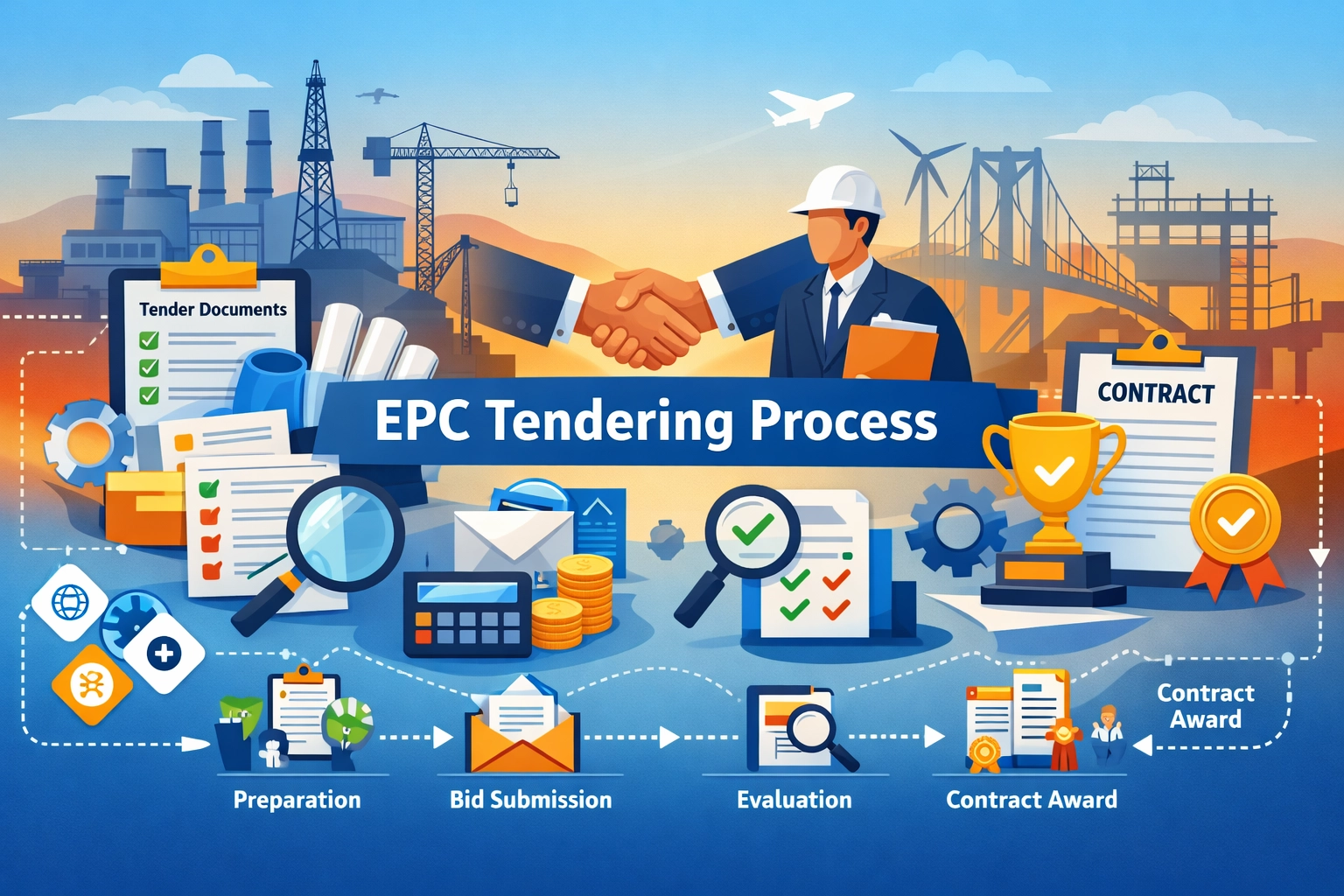
The tendering process is a structured method used by organizations to invite suppliers or contractors to submit bids for a project. In large infrastructure developments and industrial projects, the tendering process ensures that contracts are awarded fairly, transparently, and based on technical and commercial evaluation.
In Engineering, Procurement, and Construction (EPC) projects, the tendering stage plays a critical role because it determines which contractor or supplier will execute major parts of the project. These projects often involve large budgets, complex engineering requirements, and multiple stakeholders. A structured EPC tender process helps organizations compare suppliers objectively and select the most qualified bidder.
The bidding process in construction is also essential for maintaining competition and ensuring that project owners receive the best combination of quality, price, and technical capability. Proper tender documentation provides clear project specifications, contractual requirements, and evaluation criteria so that bidders can prepare accurate proposals.
This guide explains the tendering process in EPC projects, including tender preparation, bid evaluation, tender documentation, and best practices. It also explores how modern AI tools such as ChatGPT, Claude, and Perplexity AI can support tender preparation and analysis.
Table of Contents
What is the Tendering Process?
The tendering process is a structured procurement method used by organizations to invite contractors or suppliers to submit proposals for a project based on defined technical and commercial requirements.
This process ensures transparency, competitive pricing, and fair evaluation when selecting contractors for engineering and construction work. Tendering is commonly used in government projects, infrastructure development, and industrial construction.
The tendering process usually includes several stages:
- preparing tender documents
- inviting bids from contractors
- receiving and evaluating proposals
- selecting the most suitable bidder
A well-structured tendering process ensures that project owners can select contractors who meet technical specifications while offering competitive pricing.
Why is Tendering Important in EPC Projects?
Tendering is essential in EPC projects because it helps organizations identify capable contractors and suppliers through a structured evaluation process.
EPC projects typically involve large investments and complex technical requirements. Selecting the wrong contractor can lead to project delays, quality issues, and budget overruns.
An effective tendering process provides several advantages:
- promotes fair competition among contractors
- ensures transparency in contractor selection
- improves cost efficiency
- ensures technical compliance with project requirements
- reduces procurement risks
By following a formal EPC tender process, project owners can compare multiple bids and choose the contractor who offers the best value.
What is the EPC Tender Process?
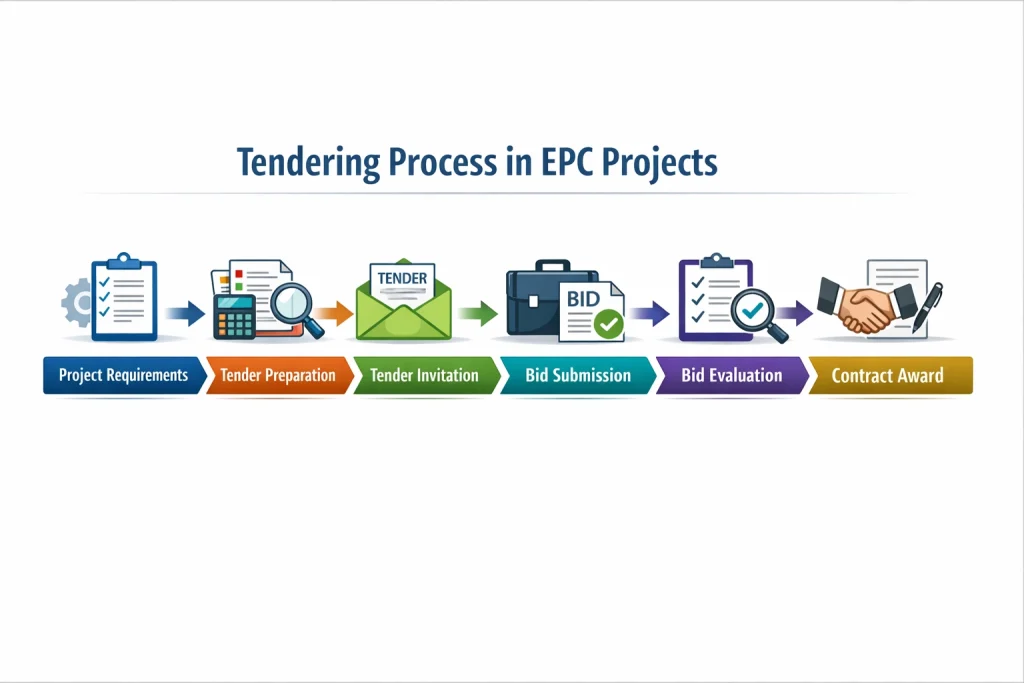
The EPC tender process refers to the structured procedure used by project owners or organizations to invite engineering and construction contractors to bid for EPC projects.
EPC tenders are typically issued for projects such as:
- power plants
- oil and gas facilities
- industrial manufacturing plants
- transportation infrastructure
- large civil construction projects
The EPC tender process ensures that contractors submit detailed technical and financial proposals based on project specifications.
The process generally includes the following phases:
- tender preparation
- tender invitation
- bid submission
- bid evaluation
- contract award
These stages help organizations evaluate contractor capabilities before awarding large engineering contracts.
What are the Main Steps in the Tendering Process?
The tendering process steps define the structured workflow used to invite bids, evaluate contractors, and award project contracts.
Step 1: Tender Preparation
Tender preparation involves defining project requirements and preparing the necessary tender documents.
Key activities include:
- defining project scope
- preparing technical specifications
- estimating project costs
- preparing evaluation criteria
At this stage, project teams ensure that all technical and commercial requirements are clearly documented.
Step 2: Tender Invitation
In this stage, the organization invites contractors or suppliers to submit bids.
Tender invitations may be issued through:
- public tender announcements
- invitations to prequalified contractors
- procurement platforms
The tender notice provides basic information about the project and submission deadlines.
Step 3: Bid Submission
Interested contractors submit their proposals according to the tender requirements.
Typical bid submissions include:
- technical proposal
- commercial proposal
- company credentials
- project methodology
Bidders must follow the instructions defined in the tender documentation to ensure their proposal is considered valid.
Step 4: Bid Evaluation
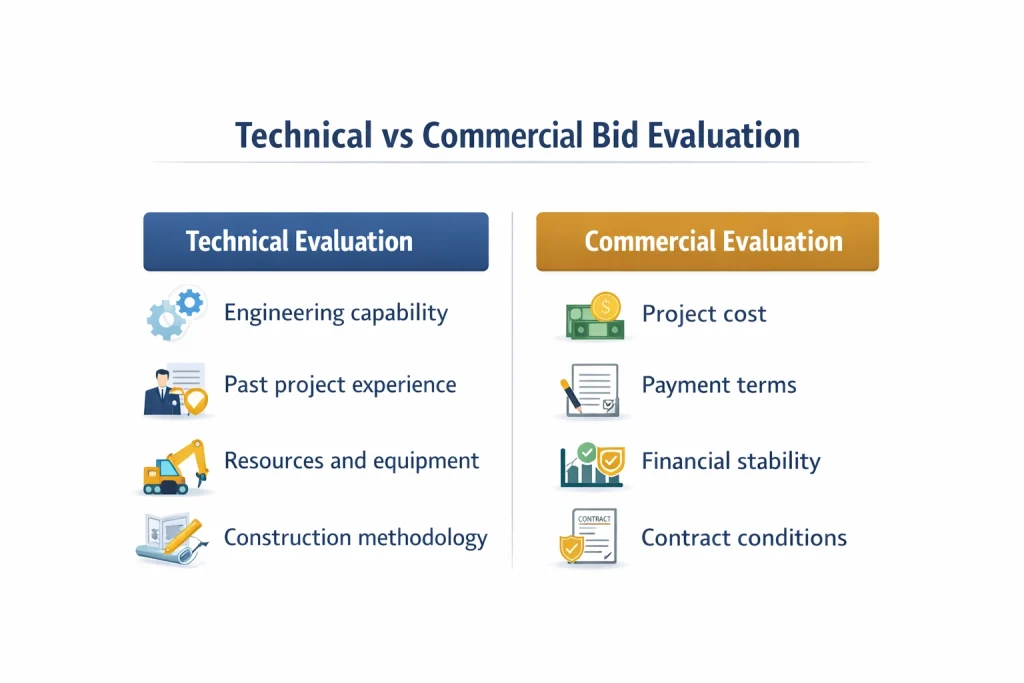
Bid evaluation is the process of analyzing contractor proposals to identify the most suitable bidder.
Evaluation typically involves two stages:
Technical Evaluation
The technical evaluation assesses whether the contractor meets project requirements.
Evaluation criteria may include:
- engineering capability
- project experience
- equipment and resources
- construction methodology
Commercial Evaluation
Commercial evaluation focuses on the financial aspects of the bid.
Factors evaluated include:
- project cost
- payment terms
- financial stability of the contractor
Organizations often use weighted evaluation models to rank bids objectively.
Step 5: Contract Award
After evaluating bids, the project owner selects the contractor who provides the best balance of technical capability and financial value.
The contract award stage includes:
- final negotiations
- signing the contract agreement
- issuing the notice to proceed
Once the contract is signed, the contractor begins executing the project according to the agreed terms.
What is Included in Tender Documentation?
Tender documentation includes all the information required for contractors to prepare accurate bids for a project.
Clear documentation helps prevent misunderstandings and ensures that bidders understand project requirements.
Typical Components of Tender Documentation
| Document | Purpose |
|---|---|
| Invitation to Tender | Official request inviting contractors to submit bids |
| Project Specifications | Detailed technical requirements |
| Scope of Work | Description of project activities |
| Contract Conditions | Legal and commercial terms |
| Bid Submission Instructions | Guidelines for preparing bids |
| Evaluation Criteria | Method used to evaluate bids |
Well-prepared tender documentation improves the quality of bids received from contractors.
How the Bidding Process Works in Construction Projects
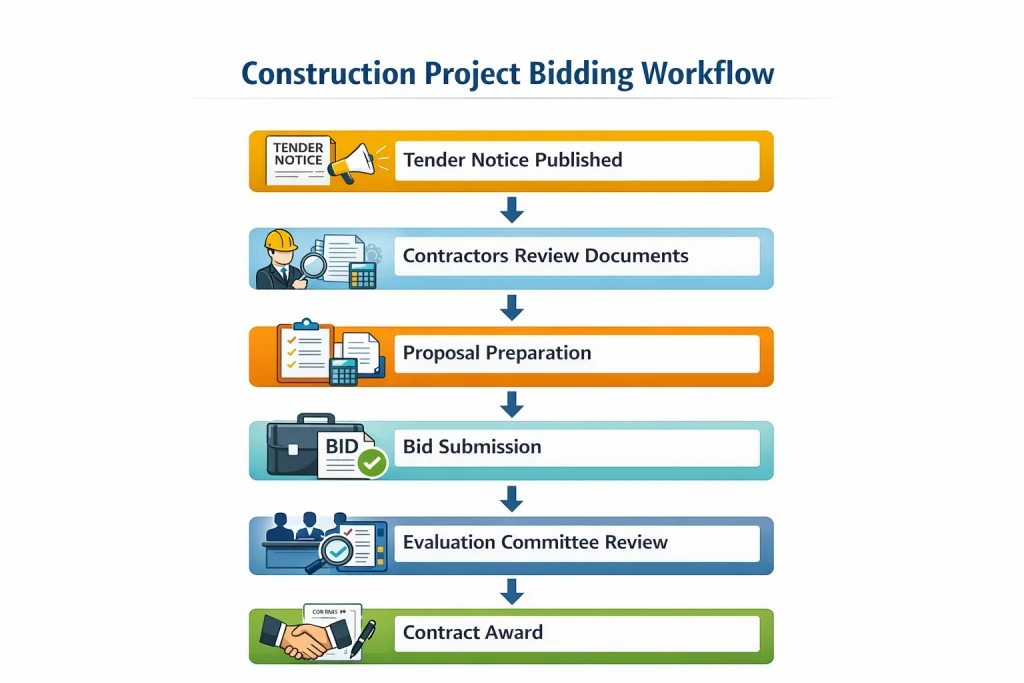
The bidding process in construction allows contractors to compete for project contracts by submitting proposals based on project requirements.
Construction bidding generally follows these stages:
- The project owner publishes a tender notice
- contractors review tender documentation
- contractors prepare technical and commercial proposals
- Bids are submitted before the deadline
- Evaluation committees review proposals
- The contract is awarded to the selected contractor
Competitive bidding helps ensure that project owners receive multiple proposals and can choose the best contractor.
Types of Tendering Methods in EPC Projects
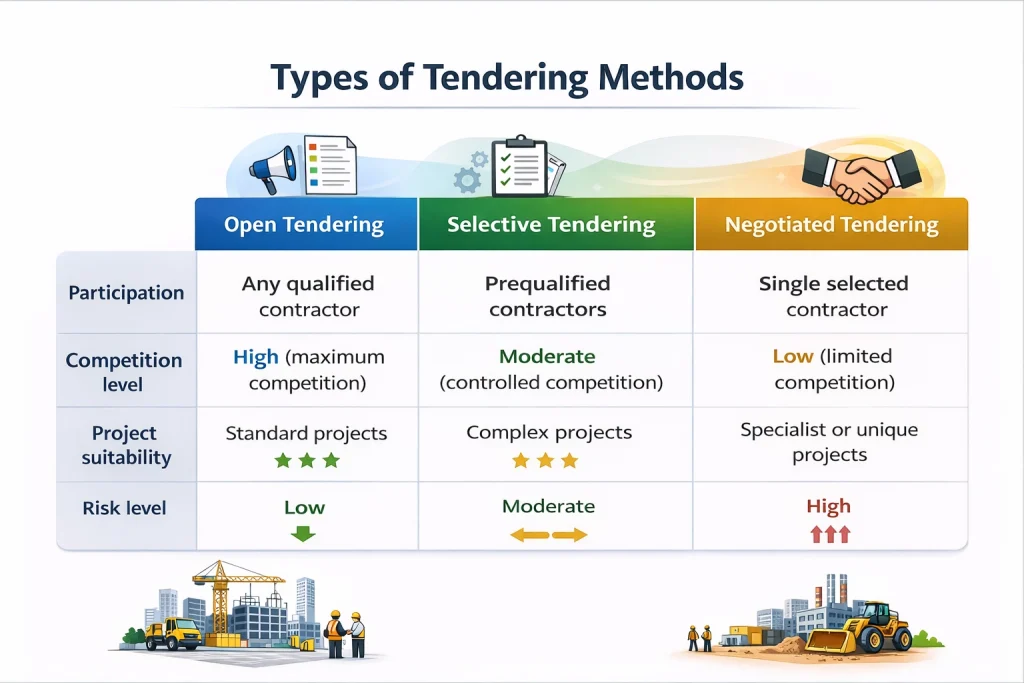
Different tendering methods are used depending on project complexity and procurement strategy.
Open Tendering
In open tendering, the tender is publicly announced, and any qualified contractor can submit a bid.
This method promotes maximum competition.
Selective Tendering
In selective tendering, only prequalified contractors are invited to submit bids.
This approach ensures that only experienced contractors participate.
Negotiated Tendering
In negotiated tendering, the project owner negotiates directly with a selected contractor.
This method is often used when projects require specialized expertise.
Choosing the appropriate tendering method depends on project requirements and risk management strategies.
How AI Tools Can Support the Tendering Process
Artificial intelligence is increasingly being used to improve procurement and tender management processes.
AI tools can assist procurement teams in preparing tender documents, analyzing bids, and managing vendor communication.
AI Applications in Tendering
Procurement teams can use ChatGPT to:
- Draft tender documents
- generate vendor communication templates
- Prepare bid evaluation checklists
AI assistants such as Claude can:
- analyze supplier bids
- summarize complex proposals
- highlight differences between vendor submissions
Research tools such as Perplexity AI can help procurement teams gather contractor information and industry benchmarks.
Using AI tools can significantly reduce the time required for bid analysis and document preparation.
Common Challenges in the Tendering Process
Although tendering improves transparency, it also presents several operational challenges.
Common challenges include:
- incomplete tender documentation
- unclear project scope
- unrealistic project timelines
- insufficient contractor experience
- bid evaluation complexity
Poor tender management can lead to disputes and project delays.
Organizations must implement structured tender procedures to avoid these risks.
Best Practices for Managing Tendering in EPC Projects
Organizations can improve the effectiveness of their tendering process by following proven best practices.
Prepare Clear Tender Documents
Detailed tender documentation ensures that bidders understand project requirements.
Use Transparent Evaluation Criteria
Clear evaluation criteria ensure fairness during contractor selection.
Prequalify Contractors
Prequalification helps ensure that only experienced contractors participate in bidding.
Maintain Structured Bid Evaluation
Using structured evaluation models helps organizations compare bids objectively.
Use Digital Procurement Platforms
Procurement platforms help manage tender documents, bid submissions, and contractor communication.
Conclusion
The tendering process in EPC projects is a critical step in selecting contractors and suppliers capable of executing large engineering and construction projects.
A structured EPC tender process ensures transparency, fair competition, and objective evaluation of contractor proposals. Proper tender documentation allows bidders to understand project requirements and prepare accurate proposals.
Key insights from this guide include:
- The tendering process ensures fair contractor selection
- Structured bid evaluation improves procurement decisions
- Clear tender documentation improves bid quality
- Competitive bidding helps control project costs
- AI tools such as ChatGPT and Claude can support tender preparation and bid analysis
Organizations that implement structured tendering procedures can significantly improve contractor selection and project outcomes.
Read: Contract Management in EPC Projects
ChatGPT for Procurement and Contract Management
Frequently Asked Questions
What is the tendering process in construction?
The tendering process is a structured method used by organizations to invite contractors or suppliers to submit bids for a project based on defined technical and commercial requirements.
What is the EPC tender process?
The EPC tender process is the procedure used to select contractors for engineering, procurement, and construction projects through competitive bidding and proposal evaluation.
What are the steps in the tendering process?
The main steps include tender preparation, tender invitation, bid submission, bid evaluation, and contract award.
What is tender documentation?
Tender documentation refers to the collection of project information, specifications, instructions, and contract conditions provided to bidders so they can prepare their proposals.
What is the bidding process in construction?
The bidding process in construction involves contractors submitting proposals to compete for project contracts based on technical capability and pricing.
What are the types of tendering methods?
Common tendering methods include open tendering, selective tendering, and negotiated tendering.
Why is tendering important in EPC projects?
Tendering helps organizations select qualified contractors, maintain transparency, and ensure competitive pricing for large engineering projects.
What is bid evaluation?
Bid evaluation is the process of analyzing contractor proposals based on technical capability, financial offer, and compliance with tender requirements.
How do digital tools help in tender management?
Digital procurement platforms help manage tender documents, bid submissions, contractor communication, and evaluation processes.
How can AI tools help in the tendering process?
AI tools can assist procurement teams in drafting tender documents, analyzing supplier proposals, comparing bids, and automating vendor communication.