


Key Takeaways
- EPC contract management training covers FIDIC contracts, variations, document control, claims, and dispute avoidance across the full project lifecycle.
- Poor document management, not just weak drafting, is a leading cause of EPC disputes and delayed claim recovery.
- Variation order management requires formal notice, cost and time impact assessment, and written approval before work proceeds.
- The FIDIC Silver Book remains the standard contract form used for EPC turnkey projects worldwide.
- Trained contract teams document properly, avoid disputes proactively, and protect project margins more effectively than untrained ones.
Picture this: You’re managing a billion-dollar power plant project. The contractor claims extra payment because of design changes. Your client says delays are the contractor’s fault. Somewhere in a 300-page contract, the answer exists.
But can you find it?
EPC projects fail not because of poor engineering. They fail because of poor contract management. Contracts define who does what, who pays for what, and who takes responsibility when things go wrong. In projects where a single delay costs millions, getting contracts wrong is not an option.That is why contract management training for EPC projects has become critical for every professional working in construction and engineering.
Why EPC & Construction Contract Management Needs Specialized Training
EPC stands for Engineering, Procurement, and Construction. Unlike regular construction jobs, EPC contracts bundle everything under one contractor. They design, procure, build, and guarantee performance.
That is a lot of risk in one package.
Most EPC projects follow FIDIC standard forms. FIDIC contract management training has become essential because these documents run hundreds of pages and allocate risks in very specific ways. Miss one critical clause and you could lose millions.
What makes EPC contracts complex:
- Multiple stakeholders with conflicting interests, including clients, contractors, subcontractors, suppliers, banks, and regulators
- Massive scope involving power plants, refineries, highways, and metro systems worth billions
- Design obligations where the contractor designs and builds, flipping traditional risk allocation completely
- Constant changes require proper documentation, approval, and cost assessment every time
- Performance guarantees where failing to meet output targets means paying heavy penalties
I have seen projects where engineering was brilliant, and construction was top quality. But poor construction contract management destroyed all the profit. Sometimes, more than the profit. Specialized training prevents this.

What a Good EPC Contract Management Course Should Cover
A comprehensive training program needs to cover the full spectrum of contract management. Not just theory. Real, practical skills you can use on Monday morning.
Here’s what should be included:
Understanding EPC & FIDIC Contracts
FIDIC-based contract management training starts with understanding why EPC delivery differs from design-bid-build approaches. In EPC, one entity takes total responsibility. This changes risk allocation fundamentally.
FIDIC provides General Conditions that are standard. The Particular Conditions are where you customize everything, including payment terms, liquidated damages, performance guarantees, and dispute resolution procedures. Understanding document hierarchy is critical because when drawings contradict specifications, you need to know where the answer sits.
The contract tells you. But you need to know where to look.
| Aspect | EPC | Design-Bid-Build |
|---|---|---|
| Risk Allocation | Contractor-heavy; contractor takes design and performance risk | Shared; client provides design while contractor executes construction |
| Design Responsibility | Contractor handles full design and build responsibility | Client or consultant provides detailed design |
| Price Model | Fixed lump-sum or turnkey model | Unit-rate or measurement-based pricing |
| Change Management | Strict variation rules; changes can be costly | Variations are common and handled through change orders |
| Performance Guarantees | High performance guarantees (output, efficiency, etc.) | Limited to workmanship quality |
| Suitable Projects | Large, complex, turnkey plants requiring single-point responsibility | Projects where clients want design control or phased execution |
EPC Contract Drafting and Negotiation
EPC contract drafting and negotiation is where the rubber meets the road. Drafting is not about legal language. It is about clarity, anticipating problems, and making sure everyone understands obligations the same way.
The scope of work section causes more disputes than any other part. A vague scope means endless arguments about what is included and what is extra. Good training teaches you to write a specific scope, use clear milestones, define deliverables precisely, and address interfaces between different work packages.
Negotiation is about finding balance. The contractor wants to limit liability. The client wants maximum protection. Training covers negotiation strategies, walk-away points, how to trade provisions, and when to compromise.
Construction Contract Lifecycle Management
Construction contract lifecycle management covers everything from contract creation to project close-out. Contracts are not static documents you sign and file away. They are living tools that need active management throughout the project.
The lifecycle includes drafting, negotiation, execution, performance monitoring, variation handling, and final close-out. EPC contract risk allocation training within lifecycle management ensures that every risk is tracked, documented, and managed at each project phase.
Modern CLM software helps by alerting teams to approaching deadlines, storing document versions, tracking approvals, and maintaining audit trails. But software is only a tool. Understanding the principles comes first.
But software is just a tool. You need to understand the principles first.

EPC Contract Document Management
Document management is the part most EPC contract training skips, and it’s often the reason claims fail even when they’re legitimate.
Every EPC project generates thousands of documents: drawings, RFIs, submittals, variation instructions, meeting minutes, progress reports, and correspondence. If these aren’t organized, version-controlled, and retrievable, you cannot prove entitlement when a dispute arises months later. Good EPC contract document management covers:
- A single source of truth for drawing and specification revisions, so disputes over “which version applies” don’t happen
- Logging every instruction, notice, and approval with dates, so notice deadlines can be proven
- Tracking RFI and submittal status so delays caused by the other party are documented as they happen, not reconstructed later
- Linking variation records, cost impact assessments, and approvals into one traceable file per change
What tools help EPC contractors control drawings, RFIs, and submittals? Cloud-based document control platforms, CDE (Common Data Environment) systems, and dedicated RFI/submittal trackers replace scattered spreadsheets and email chains. The discipline still matters more than the tool. Teams that document consistently win claims; teams with the same facts but no paper trail lose.
Variation Order Management in EPC Projects
Variation order management is the formal process of identifying, documenting, costing, approving, and implementing scope changes during an EPC project. It addresses the single biggest source of disputes in construction contracting.
Client design changes, differing site conditions, regulatory updates, and equipment delays all trigger variations. Each one needs to follow the same sequence: a written variation request, a cost and time impact assessment, signed approval, and only then a start on the actual work. Problems happen when changes are verbal, when work starts before a cost agreement, or when documentation is missing. Training should drill teams on following this process every time, even when it feels slow.
Risk Allocation and Management
EPC contract risk allocation training sits at the heart of every EPC contract. Every project carries design risks, construction risks, weather risks, regulatory risks, and financial risks. The question is not whether risks exist. It is who bears them.
In EPC contracts under EPC contracts, risk, claims, and variations frameworks, contractors typically take design risk, price risk through lump-sum pricing, and performance risk through guarantees. Clients retain site condition risks, their own approval risks, and certain political and regulatory risks.
Fair risk allocation means putting risks with the party best able to control them at the lowest overall cost.

Contract Variation and Change Order Training
Contract variation and change order training addresses the area that causes the most disputes in construction projects.
Changes are inevitable. Client design modifications, differing site conditions, regulatory changes, and equipment delivery issues all trigger variations. Each change must follow a formal process, including a variation request, cost and time impact assessment, written approval, and proper documentation before work proceeds.
Problems arise when changes are ordered verbally, when work proceeds before a cost agreement, or when documentation is missing. EPC contract management and dispute resolution training teaches teams to follow the process every single time, even when it feels bureaucratic.

Subcontract Management Training for EPC
Subcontract management training EPC covers how obligations flow from the main contract down to subcontractors. Main contractors rarely perform all work themselves. This creates additional complexity that needs careful management.
Poor subcontract management multiplies problems across the project. The main contractor remains fully liable to the client regardless of subcontractor failures. Training covers subcontract drafting, flow-down provisions, back-to-back terms, interface management, quality enforcement, and handling subcontractor claims without damaging working relationships.

Delay Analysis and EOT Claims Training
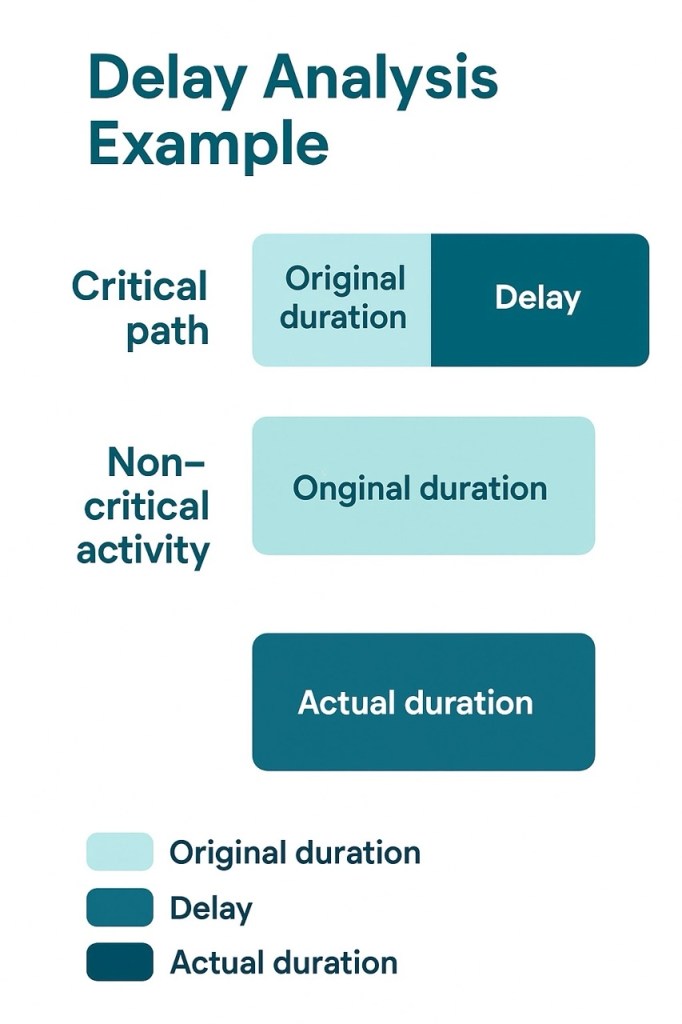
Delay analysis and EOT claims training is one of the most technically demanding areas of construction contract management.
Contractors must prove that delays were caused by events beyond their control, that entitlement exists under the contract, and that reasonable mitigation steps were taken. The client often disputes causation, claims concurrent delays, or challenges whether proper notices were given.
Training covers critical path analysis methods, notice requirements, documentation needed for delay claims, preparing and defending extension of time submissions, and analyzing concurrent delay situations where both parties contributed to schedule overruns.
Contract Administration and Compliance
Day-to-day construction contract lifecycle management administration is not glamorous but it is essential. Someone must track milestones, monitor progress, review submittals, process payments, verify specification compliance, and conduct inspections.
Documentation is everything. Progress reports, site diaries, photographs, test certificates, as-built drawings, and meeting minutes serve multiple purposes. They track performance, provide dispute evidence, and maintain project memory as team members rotate.

Dispute Resolution and Claims Management
EPC contract management and dispute resolution training covers the tiered approach used in FIDIC contracts. The Engineer or Employer’s Representative makes initial determinations. Parties can escalate to a Dispute Adjudication Board. If still unresolved, arbitration follows.
Dispute Adjudication Boards are particularly valuable in EPC projects. These independent experts are appointed at project start, visit the site regularly, and understand the project deeply. They resolve disputes quickly compared to arbitration, which can take years, by which point evidence is cold, and witnesses have moved on.
Claims Management and Dispute Avoidance Support
Who can actually support claims management and dispute avoidance on EPC contracts? Three groups typically fill this role: independent claims consultants brought in for a specific dispute, in-house contract administrators trained to manage notices and entitlement, and training providers who build that capability into teams before disputes escalate.
The most effective approach combines all three. Training builds daily notice and documentation discipline. A trained in-house team catches problems early. External consultants step in only when a dispute already needs specialist support. Our consulting services cover contractual due diligence and variation and delay claim assessment for organizations needing that external layer.
How to Choose a Credible EPC Contract Management Training Provider
Reviews and case studies matter, but the EPC training market is small enough that public review volume is often thin. Before enrolling in any EPC course, use these checks instead:
- Practitioner background: has the trainer actually managed EPC contracts, processed real variations, and sat through claims or arbitration, or is the content purely academic?
- EPC-specific content: general contract law training won’t cover FIDIC document hierarchy, turnkey risk allocation, or performance guarantee mechanics in enough depth.
- Case-based delivery: look for real project examples and exercises, not just slides of clause summaries.
- Verifiable track record: ask how many professionals and which organizations the trainer has worked with.
Rajeev Sharma, founder of RKS Trainings, brings 25+ years of hands-on experience in EPC contracts, procurement, supply chain, and project management across India and the GCC, and has trained more than 5,000 professionals including teams at Reliance Industries and major EPC contractors. Training is built around real contract reviews, variation processing exercises, and claims preparation workshops rather than theory alone.
Who Should Attend This Training
This training is not just for lawyers. Anyone involved in EPC or construction contracts benefits.
Project managers need to understand contract obligations and change procedures to run projects effectively. Contract administrators live in these documents daily and need deep knowledge. Procurement and commercial teams negotiate and administer contracts and need to know what protects their organization. Site engineers deal with contract implications every day as variations arise from site issues.
Even fresh graduates entering construction benefit enormously. Starting with solid FIDIC contract management training accelerates career development and prevents costly early mistakes.
Benefits & Career Value of Contract Management Training
Construction contract management training delivers measurable value at both individual and organizational levels.
For individuals, it builds clarity on obligations, improves risk identification, strengthens negotiation ability, and creates professional confidence in client meetings and dispute situations. Engineers and project managers with contract expertise become the people management trusts with difficult projects.
For organizations, trained staff make fewer costly mistakes, manage risks proactively, document properly, negotiate better terms, and handle disputes more effectively. One contractor told me their team used to simply absorb delay costs. After training in EPC contracts, risk, claims and variations, they started documenting and claiming properly. Their margins improved significantly.
How to Choose a Good Contract Management Training Course
A good EPC contract management course should cover the full lifecycle from drafting through dispute resolution, not just contract law. It needs EPC-specific content covering FIDIC contracts, turnkey delivery, and construction-specific issues.
Look for a balance of theory and practice. Case studies from real projects teach application in ways that theory alone cannot. Instructors who have actually managed contracts, handled claims, and sat in arbitrations bring different value than purely academic trainers.
Certification adds credibility and signals to employers that rigorous training has been completed. Flexible online or modular delivery helps working professionals who cannot take a full week away from projects.
Common Mistakes & Pitfalls in EPC Contract Management
Poorly defined scope remains the single biggest source of disputes. Inadequate risk allocation leads to contractors pricing in huge contingencies or going bankrupt. Weak variation management creates cost explosions when changes pile up without proper authorization.
Missed notice deadlines under delay analysis and EOT claims training topics are particularly damaging. Miss a 28-day notice requirement, and a valid claim can be time-barred entirely. Poor documentation means that even legitimate claims cannot be proven when disputes reach adjudication or arbitration.
Conclusion
EPC and construction contracts are complex, high-stakes, and critical to project success. The best engineers, skilled crews, and modern equipment still cannot save a project with weak contract management.
Contract management training for EPC projects improves everything. Projects run more smoothly. Risks are managed better. Variations are handled efficiently. Disputes are resolved faster. For individuals, it accelerates careers. For organizations, it improves profitability, reduces legal exposure, and builds stronger client relationships.
The investment in quality construction contract management training pays back many times over on the very first project where it is applied.
Frequently Asked Questions
What types of projects need EPC contract management training?
Power plants, refineries, highways, metro systems, and industrial facilities benefit most. Any project combining design, procurement, and construction under one contract needs these skills.
Is training useful for small-scale construction projects or only large EPC projects?
Principles apply broadly to all project sizes. Scope definition, variations, risk allocation, and subcontractor management challenges exist on small projects too, making training universally valuable.
Will training help in managing subcontractors effectively?
Yes. Subcontract management training EPC covers drafting, flow-down provisions, interface management, performance monitoring, and handling subcontractor claims while protecting your main contract position.
Can certified training reduce the chances of disputes or legal issues?
Significantly yes. Proper drafting, documentation discipline, correct notice procedures, and early dispute identification through training prevent most disputes from escalating into costly legal battles.
How much experience is ideal before enrolling in this training?
No prior experience is required. Fresh graduates and seasoned professionals both benefit. Beginners build foundations while experienced staff fill knowledge gaps and update their understanding of current FIDIC practices.
Is knowledge of FIDIC necessary before training?
Not at all. Good FIDIC contract management training starts from the basics, explaining each book, risk profiles, and how General and Particular Conditions interact throughout the contract lifecycle.
Does the course cover delay claims, EOT, change orders, and variation orders?
Yes. Delay analysis and EOT claims training covers critical path analysis, notice requirements, concurrent delays, variation order procedures, and documentation needed to prepare and defend claims effectively.
Are digital tools covered for contract lifecycle management?
Modern courses introduce CLM software, document management systems, and collaboration platforms. Understanding available technology helps organizations implement better construction contract lifecycle management systems across teams.
Is training more theoretical or does it include practical case studies?
Quality courses balance both. Look for at least forty percent hands-on content, including mock negotiations, contract reviews, variation order exercises, and real project dispute case studies throughout.
How does training benefit a construction firm beyond individual staff?
Firms gain standardized practices, fewer costly errors, better risk management, stronger negotiation outcomes, improved subcontractor control, and overall better project profitability through consistent contract management training for EPC projects.
What is variation order management in EPC projects?
Variation order management is the formal process of identifying, documenting, costing, approving, and implementing scope changes during an EPC project, preventing disputes over unauthorized or unpriced additional work.
What types of projects need EPC contract management training?
Power plants, refineries, highways, metro systems, and industrial facilities benefit most. Any project combining design, procurement, and construction under a single contract needs these skills regardless of size.