

Contract management is one of the most critical functions in large infrastructure and construction projects, especially in Engineering, Procurement, and Construction (EPC) projects. It ensures that all contractual obligations between project stakeholders are clearly defined, executed properly, and monitored throughout the project lifecycle.
In EPC projects, contracts govern every major activity, including engineering design, procurement of equipment, construction execution, and project delivery. Because these projects involve multiple stakeholders such as contractors, subcontractors, suppliers, consultants, and clients, effective Contract Management in EPC Projects is essential to avoid disputes, delays, and financial losses.
Studies in the construction industry show that poor contract management can increase project costs by 8–15% due to disputes, claims, and delays. A structured contract management process helps organizations track obligations, manage risks, ensure compliance, and maintain transparency between project parties.
This practical guide explains EPC contract management, the contract lifecycle, contract administration practices, risk management strategies, and how modern AI tools such as ChatGPT, Claude, and Perplexity AI can support contract managers in analyzing agreements and identifying potential risks.
Table of Contents
What is Contract Management?
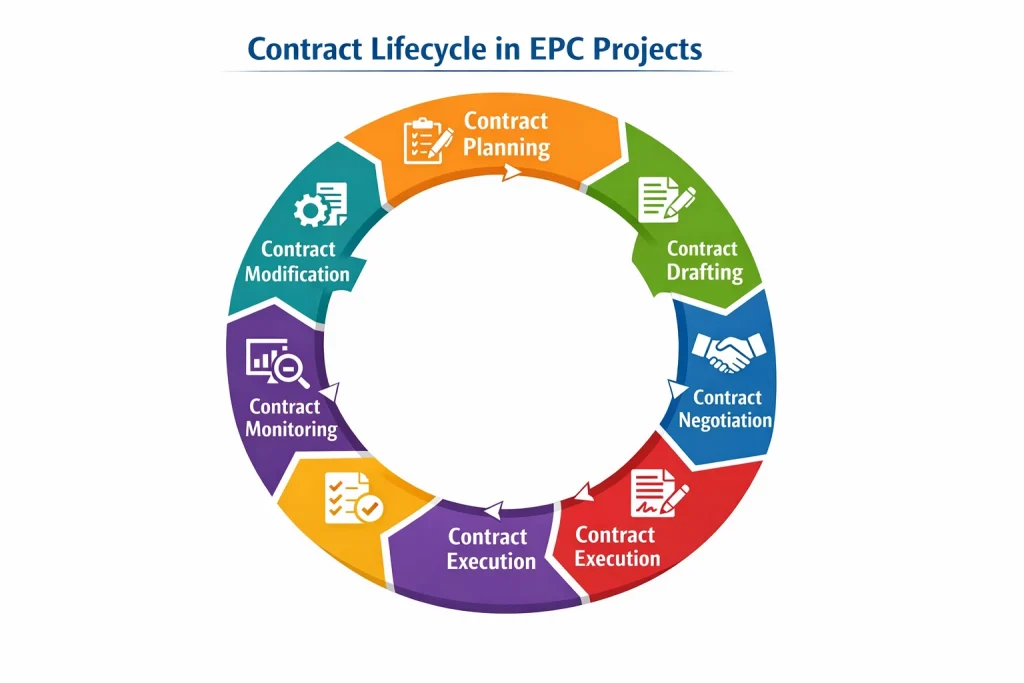
Contract management is the process of creating, negotiating, executing, monitoring, and enforcing contracts between project stakeholders to ensure that all parties fulfill their contractual obligations.
In large engineering and construction projects, contracts define the responsibilities, timelines, technical requirements, and financial terms agreed upon by the parties involved.
Effective contract management ensures that:
- contractual obligations are clearly defined
- Project risks are allocated appropriately
- performance standards are maintained
- disputes are minimized
The contract management process continues throughout the entire project lifecycle, from contract drafting to final project completion.
Why is Contract Management Important in EPC Projects?
Contract management in EPC projects ensures that all contractual agreements are implemented correctly and that project stakeholders comply with the agreed terms and conditions.
EPC projects typically involve high-value contracts and complex responsibilities. A single project may include multiple contracts for engineering services, equipment supply, construction activities, and subcontracting work.
Effective contract management provides several benefits:
- improved project cost control
- better risk allocation between stakeholders
- reduced legal disputes
- stronger supplier and contractor accountability
- improved project performance
Because EPC projects involve multiple contracts and stakeholders, managing contractual obligations effectively becomes essential for project success.
What is the Contract Management Process?
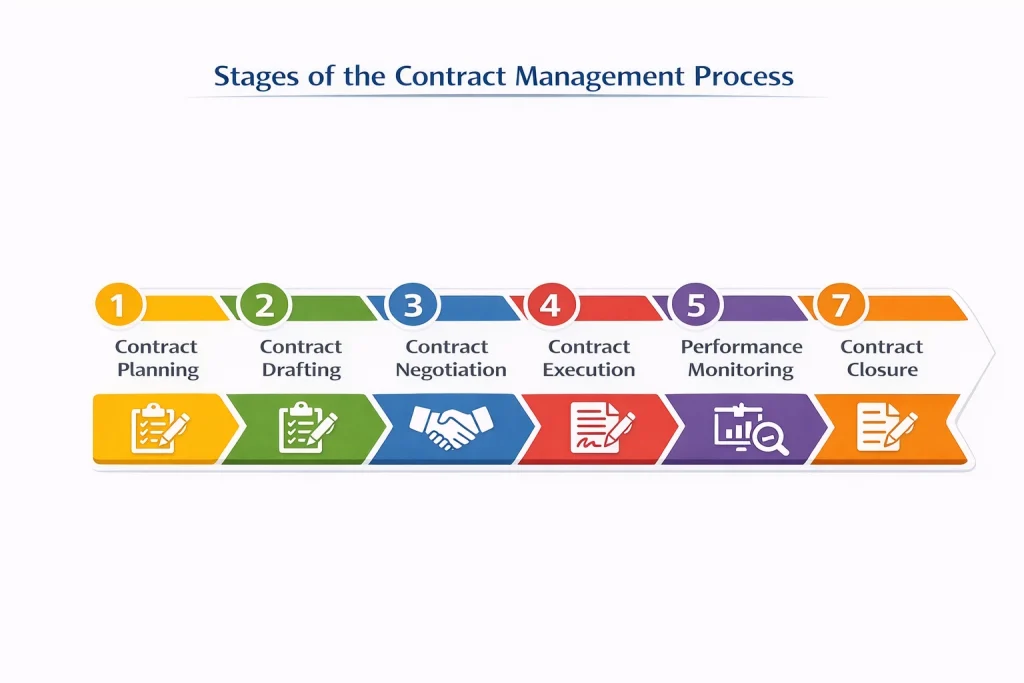
The contract management process refers to the structured sequence of activities used to manage contracts throughout their lifecycle.
This process ensures that contracts are properly negotiated, implemented, monitored, and closed after project completion.
Major Stages of the Contract Management Process
| Stage | Description |
|---|---|
| Contract Planning | Define project requirements and contract strategy |
| Contract Drafting | Prepare legal and technical contract documents |
| Negotiation | Discuss contract terms with stakeholders |
| Contract Execution | Sign and implement the contract |
| Performance Monitoring | Track contractor performance |
| Contract Modification | Manage contract changes and variations |
| Contract Closure | Finalize the contract after project completion |
Organizations often use digital contract management systems to track contractual obligations and maintain documentation.
What are the Key Phases of EPC Contract Management?
EPC contract management involves multiple phases that ensure contracts are implemented correctly throughout the project lifecycle.
Contract Planning
Contract planning defines the overall contracting strategy for the project.
Activities in this phase include:
- defining contract scope
- selecting contract types
- identifying contractual risks
- preparing procurement strategies
Proper planning helps avoid ambiguity in contract terms.
Contract Drafting
Contract drafting involves preparing the legal and technical documents that define the contract.
A typical EPC contract includes:
- scope of work
- project timeline
- payment conditions
- performance guarantees
- dispute resolution mechanisms
Clear drafting helps reduce misunderstandings between project stakeholders.
Contract Negotiation
Negotiation is the process of discussing and finalizing contract terms between the parties involved.
Negotiation usually covers:
- pricing structure
- risk allocation
- delivery schedules
- liability conditions
Effective negotiation ensures that both parties agree on fair and realistic contract terms.
Contract Execution
Contract execution occurs when both parties formally sign the contract and begin implementing the agreed obligations.
At this stage, project teams begin coordinating engineering, procurement, and construction activities according to contract conditions.
Contract execution marks the official start of the project contract lifecycle.
Contract Monitoring and Administration
Contract monitoring ensures that all parties comply with the contract terms.
Contract managers monitor:
- contractor performance
- milestone completion
- payment schedules
- compliance with specifications
Contract administration also includes managing communication between project stakeholders.
Contract Modification and Change Management
During project execution, contract changes may occur due to design modifications, scope changes, or unforeseen conditions.
Contract managers must document and approve changes through formal variation orders.
Proper change management helps avoid contract disputes and cost overruns.
Contract Closure
Contract closure occurs after all contractual obligations have been fulfilled.
Activities in this phase include:
- final inspections
- final payment processing
- contract documentation archiving
- performance evaluation
Contract closure ensures that the project is completed according to contractual requirements.
How Contract Management Works in Construction Projects
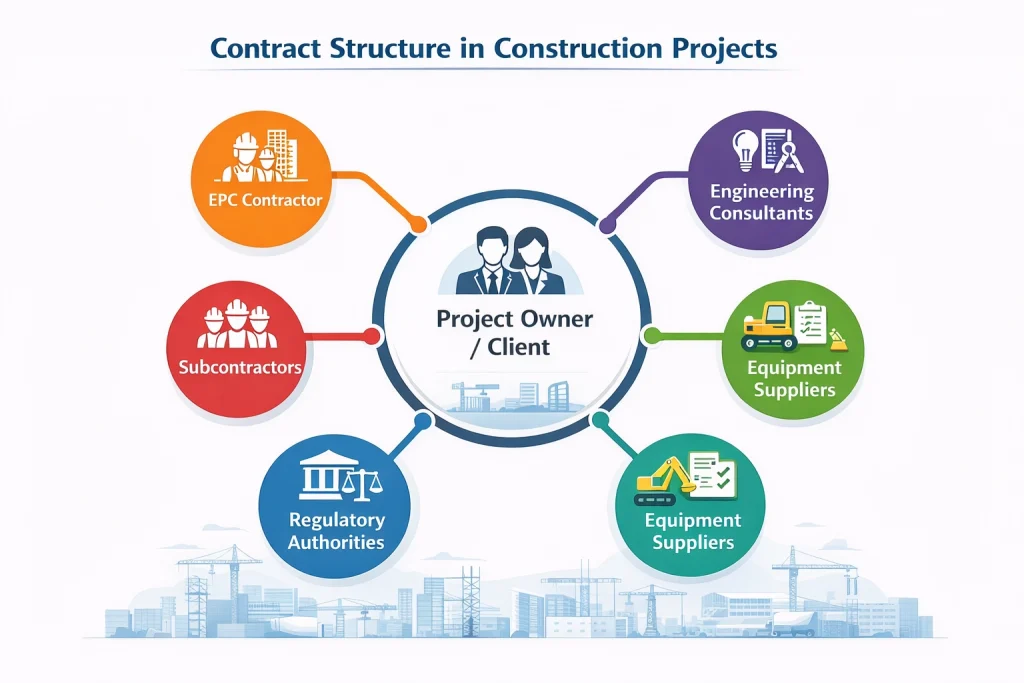
Contract management in construction involves monitoring contractual performance during the project execution phase.
Construction projects involve multiple contracts, including:
- EPC main contract
- subcontractor agreements
- equipment supply contracts
- engineering consultancy agreements
Contract managers ensure that:
- contractors meet technical specifications
- project milestones are achieved
- Payments are processed correctly
- Disputes are resolved efficiently
Construction contract management requires continuous coordination between project managers, legal teams, procurement teams, and contractors.
Common Types of EPC Contracts
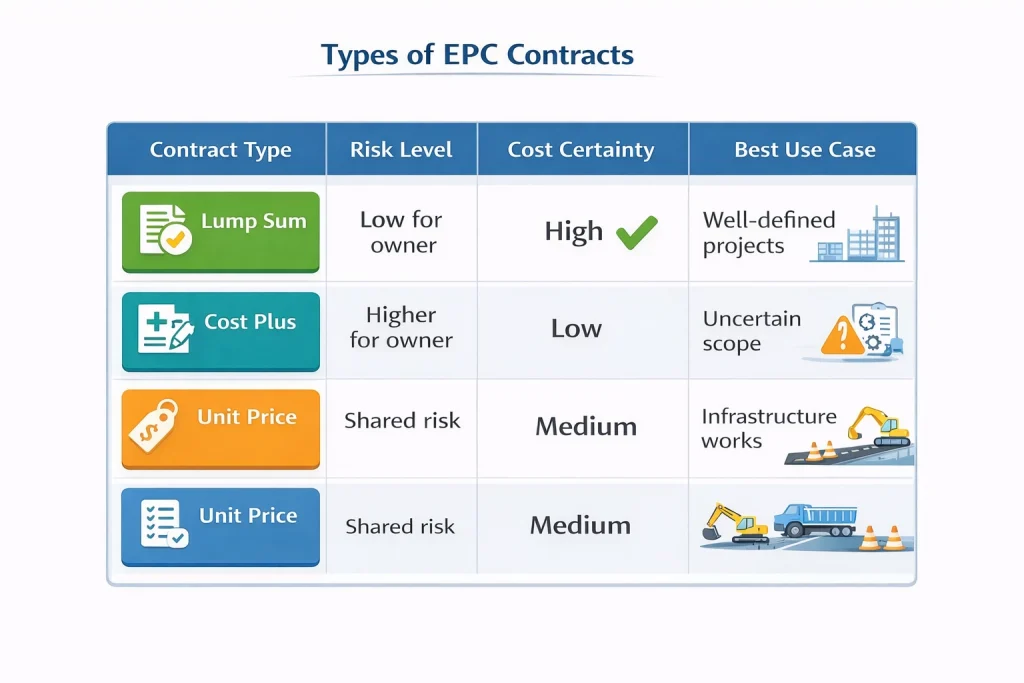
Different types of contracts are used depending on project structure, risk allocation, and project complexity.
Lump Sum EPC Contract
In a lump sum contract, the contractor agrees to deliver the entire project for a fixed price.
This contract type provides cost certainty for the project owner.
Cost Plus Contract
In a cost-plus contract, the contractor is reimbursed for actual project costs plus an additional fee or profit margin.
This type of contract is often used when the project scope is uncertain.
Unit Price Contract
In a unit price contract, payment is based on the quantity of work completed.
This approach is common in infrastructure and construction projects.
Selecting the appropriate contract type is an important part of the contract management strategy.
How AI Tools Can Support Contract Management
Artificial intelligence is increasingly helping organizations analyze and manage complex contracts.
AI tools can assist contract managers in reviewing large legal documents and identifying important clauses.
Example AI Applications in Contract Management
Contract managers can use ChatGPT to:
- explain complex contract clauses
- draft contract summaries
- generate contract communication emails
AI assistants such as Claude can:
- summarize long agreements
- Highlight risk clauses
- Extract key obligations from contracts
Research tools like Perplexity AI can help teams review contract law updates and industry standards.
AI-powered contract analysis tools help organizations reduce legal risks and improve contract transparency.
What Are the Common Contract Risks in EPC Projects?
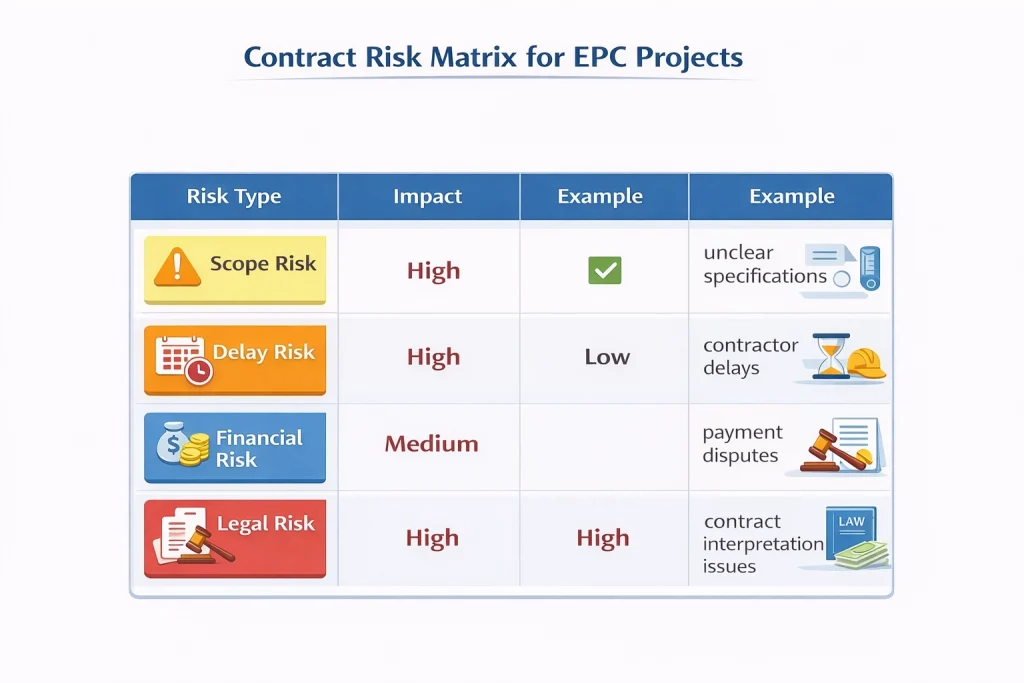
Contract risks can significantly impact project outcomes if they are not properly managed.
Common risks in EPC contracts include:
- unclear scope definitions
- payment disputes
- contractor delays
- design responsibility conflicts
- regulatory compliance issues
Poorly defined contracts often lead to disputes and claims during project execution.
Strong contract management practices help mitigate these risks and ensure project stability.
Best Practices for Effective Contract Management
Organizations can improve contract performance by following proven contract management practices.
Establish Clear Contract Documentation
Contracts should clearly define scope, responsibilities, and deliverables.
Maintain Transparent Communication
Open communication between stakeholders helps prevent misunderstandings.
Monitor Contract Performance
Regular performance monitoring ensures contractors comply with project requirements.
Implement Strong Change Management
All contract changes should be documented and approved through formal processes.
Use Digital Contract Management Systems
Contract management software helps organizations track obligations, documents, and performance metrics.
Conclusion
Contract management in EPC projects plays a crucial role in ensuring that complex engineering and construction projects are executed according to agreed terms.
A structured contract management process helps organizations manage risks, maintain transparency, and ensure that project stakeholders fulfill their obligations.
Key insights from this guide include:
- Contract management ensures compliance with contractual agreements
- EPC projects require structured contract monitoring and administration
- Clear contract documentation reduces disputes
- Digital contract systems improve contract visibility
- AI tools such as ChatGPT and Claude can support contract analysis and risk identification
Organizations that implement strong EPC contract management practices are better positioned to control project risks, maintain stakeholder trust, and deliver projects successfully.
Read: Top Risks in EPC Projects and How to Manage Them
ChatGPT for Procurement and Contract Management
Commercial Management in EPC Contracts: Best Practices
Frequently Asked Questions
What is contract management?
Contract management is the process of creating, executing, monitoring, and enforcing agreements between parties to ensure contractual obligations are fulfilled and project objectives are achieved.
What is the contract management process?
The contract management process includes contract planning, drafting, negotiation, execution, monitoring, modification, and closure.
Why is contract management important in construction projects?
Contract management ensures that construction projects follow agreed terms, manage risks effectively, and prevent disputes between project stakeholders.
What is EPC contract management?
EPC contract management refers to managing contracts related to engineering, procurement, and construction activities in large infrastructure or industrial projects.
What are the common contract types in EPC projects?
Common EPC contract types include lump sum contracts, cost plus contracts, and unit price contracts.
What are the responsibilities of a contract manager?
A contract manager oversees contract negotiation, monitors performance, manages changes, and ensures compliance with contract terms.
What are contract variations in construction?
Contract variations refer to changes in project scope, specifications, or timelines that require modification of the original contract terms.
What are common risks in EPC contracts?
Common risks include unclear scope definitions, contractor delays, payment disputes, and regulatory compliance issues.
How do digital tools help in contract management?
Digital contract management systems help organizations store contracts, track obligations, manage approvals, and monitor contract performance.
How can AI support contract management?
AI tools can analyze contracts, summarize legal documents, identify risk clauses, and assist contract managers in understanding complex contract terms.