

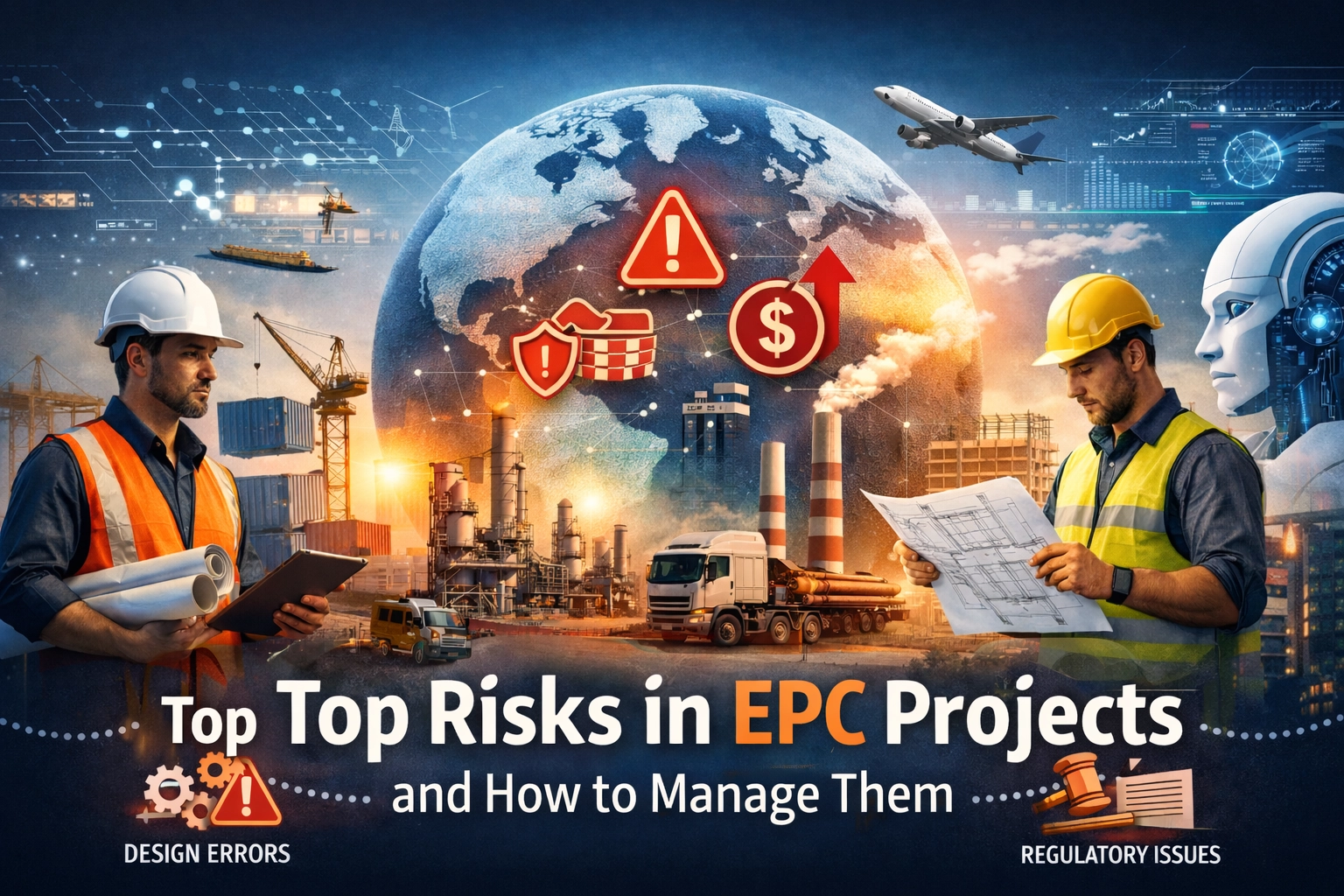
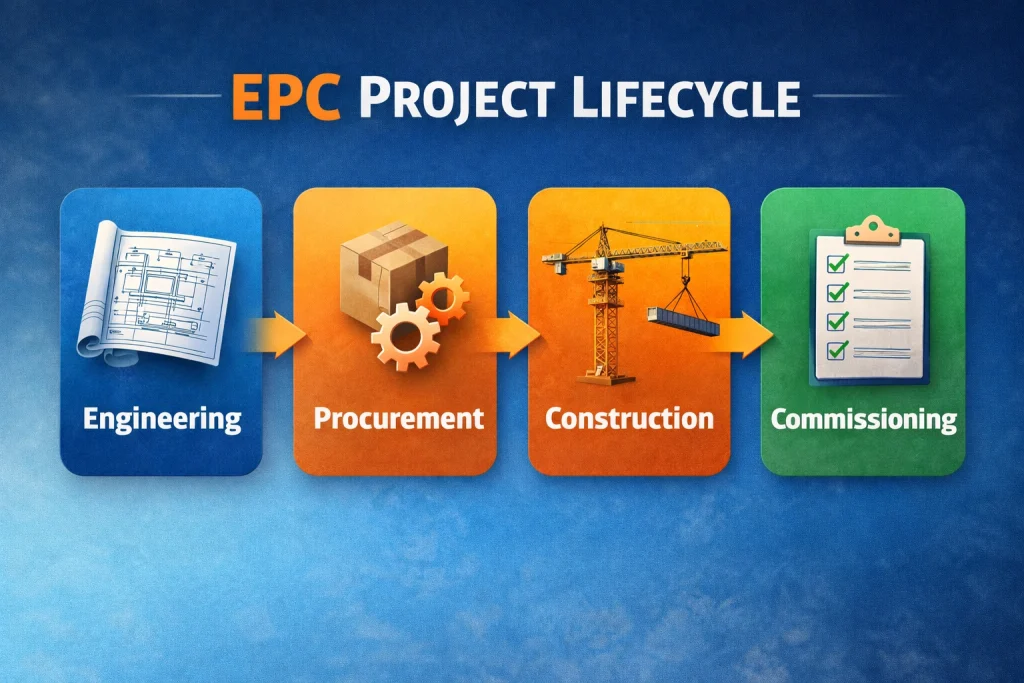
Engineering, Procurement, and Construction (EPC) projects are widely used to deliver large infrastructure, industrial plants, power stations, and energy facilities. In an EPC model, a single contractor is responsible for designing the project, procuring materials and equipment, and completing construction within an agreed timeframe and budget. While this integrated delivery approach simplifies contractual responsibility, it also creates significant project complexity.
EPC projects often involve large budgets, global suppliers, strict regulatory requirements, and tight schedules. Multiple teams must coordinate engineering design, procurement activities, logistics, construction work, and stakeholder communication simultaneously. Because of these factors, even small disruptions can escalate into serious delays or cost overruns.
This is why effective risk management is essential for EPC project success. Identifying potential risks early and implementing proactive mitigation strategies allows project managers and contractors to control uncertainty, protect project budgets, and ensure timely project delivery.
Table of Contents
Understanding EPC Project Risks
EPC project risks refer to uncertain events or conditions that can negatively impact project objectives such as cost, schedule, safety, quality, or performance. Due to the scale and complexity of EPC projects, risks can arise from many different areas, including engineering design, procurement operations, regulatory approvals, and contractor coordination.
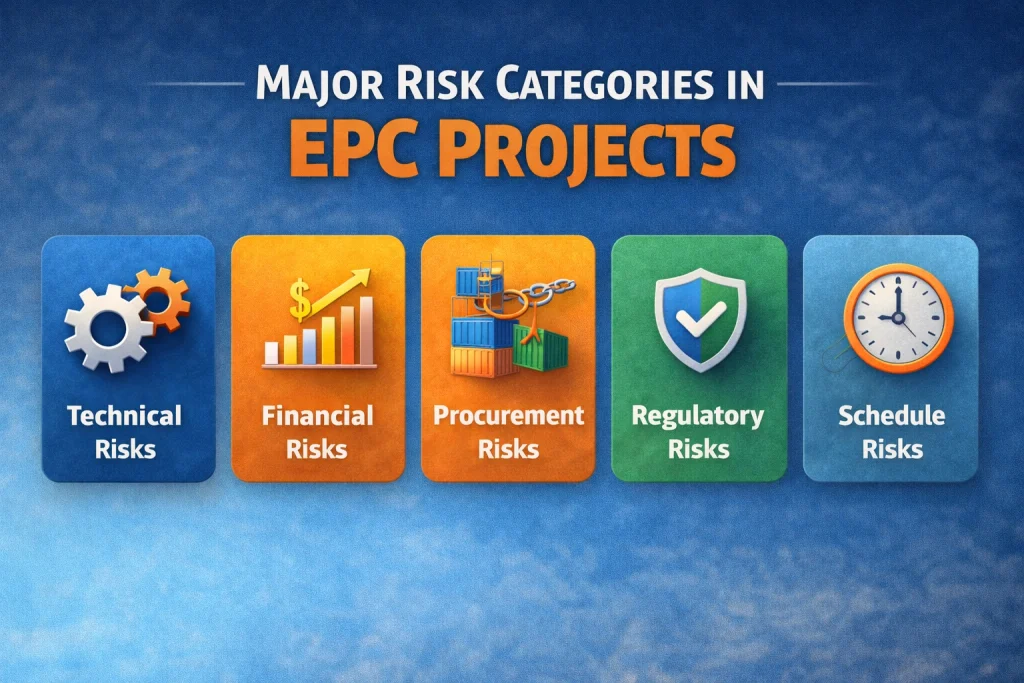
Common categories of EPC project risks include:
- Technical Risks
- Design errors
- Engineering miscalculations
- Technology integration failures
- Financial Risks
- Cost overruns
- Budget estimation errors
- Currency fluctuations
- Procurement Risks
- Supplier delays
- Equipment shortages
- Logistics issues
- Regulatory Risks
- Permit delays
- Environmental compliance issues
- Changes in government policies
- Schedule Risks
- Construction delays
- Contractor coordination issues
- Late delivery of materials or equipment
Understanding these risk categories allows project teams to create structured risk management plans and maintain project stability throughout the project lifecycle.
Top Risks in EPC Projects and How to Manage Them
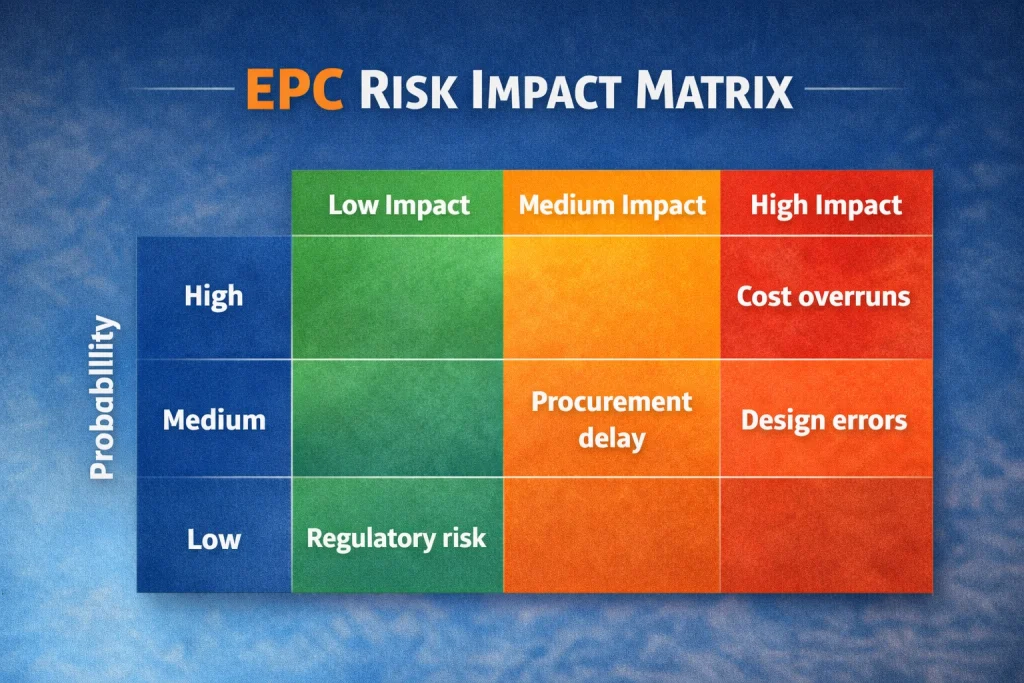
Large EPC projects involve numerous stakeholders, vendors, subcontractors, and regulatory bodies. The following risks frequently impact project delivery and require proactive management.
1. Procurement Delays
Procurement is a critical stage in EPC projects because construction activities depend heavily on the timely delivery of materials, equipment, and specialized components. Delays in procurement can disrupt construction schedules and significantly impact project timelines.
Why does this risk occurs
- Inefficient procurement process
- Incomplete procurement documentation
- Delays in supplier response to RFQs
- Poor supplier evaluation during the procurement process steps
Impact on projects
- Construction teams are waiting for materials
- Increased project costs due to idle labor
- Project schedule extensions
Mitigation strategies
- Establish clear procurement process steps
- Create detailed procurement schedules aligned with project timelines
- Prequalify reliable suppliers
- Use digital procurement tracking systems
- Maintain buffer time for critical equipment deliveries
2. Contractor Performance Issues
Contractor performance is a major risk factor in EPC projects because contractors are responsible for executing engineering, procurement, and construction activities.
Why does this risk occurs
- Lack of contractor experience
- Poor project supervision
- Resource shortages
- Inadequate project management systems
Impact on projects
- Construction delays
- Reduced quality of work
- Increased project rework and costs
Mitigation strategies
- Conduct contractor capability assessments
- Monitor contractor performance regularly
- Use performance-based contracts
- Implement structured progress reporting systems
3. Design Errors and Engineering Changes
Engineering design forms the foundation of an EPC project. Errors in design or frequent design modifications can lead to construction problems and increased project costs.
Why does this risk occurs
- Incomplete project specifications
- Insufficient engineering review
- Communication gaps between design teams
- Client-driven scope changes
Impact on projects
- Construction rework
- Material wastage
- Delays in project milestones
Mitigation strategies
- Implement detailed engineering design reviews
- Use Building Information Modeling (BIM)
- Conduct constructability analysis
- Establish strict change management procedures
4. Cost Overruns
Cost overruns are one of the most common challenges in large infrastructure and industrial projects. When project expenses exceed the original budget, contractors and owners may face serious financial risks.
Why does this risk occurs
- Inaccurate project cost estimation
- Design changes during construction
- Inflation in material prices
- Poor financial monitoring
Impact on projects
- Reduced contractor profitability
- Budget constraints
- Potential project financing issues
Mitigation strategies
- Develop accurate cost estimation models
- Maintain contingency budgets
- Monitor project expenditures regularly
- Use financial forecasting tools
5. Supply Chain Disruption
Global supply chains play a crucial role in EPC projects because many specialized components are sourced internationally. Supply chain disruptions can delay project progress significantly.
Why does this risk occurs
- Transportation delays
- Port congestion
- Supplier production issues
- Geopolitical disruptions
Impact on projects
- Delayed equipment delivery
- Increased logistics costs
- Construction schedule disruptions
Mitigation strategies
- Diversify supplier networks
- Identify alternative suppliers
- Monitor supplier performance
- Implement supply chain risk monitoring systems
6. Regulatory and Compliance Risks
EPC projects must comply with various environmental, safety, and construction regulations. Failure to meet regulatory requirements can result in project delays or legal penalties.
Why does this risk occurs
- Complex government approval processes
- Environmental compliance requirements
- Changes in regulatory policies
- Incomplete documentation
Impact on projects
- Project shutdowns
- Legal penalties
- Design modifications
Mitigation strategies
- Conduct regulatory compliance reviews
- Maintain proper documentation
- Work closely with regulatory authorities
- Engage legal advisors during project planning
7. Schedule Delays
Schedule delays can occur when project milestones are not achieved as planned. These delays can cascade through the project lifecycle and affect overall project delivery.
Why does this risk occurs
- Late procurement deliveries
- Poor coordination between contractors
- Weather disruptions
- Labor shortages
Impact on projects
- Increased project costs
- Contract penalties
- Delayed revenue generation
Mitigation strategies
- Use project scheduling software
- Perform critical path analysis
- Conduct regular project progress reviews
- Improve coordination between project teams
Procurement Risks in EPC Projects
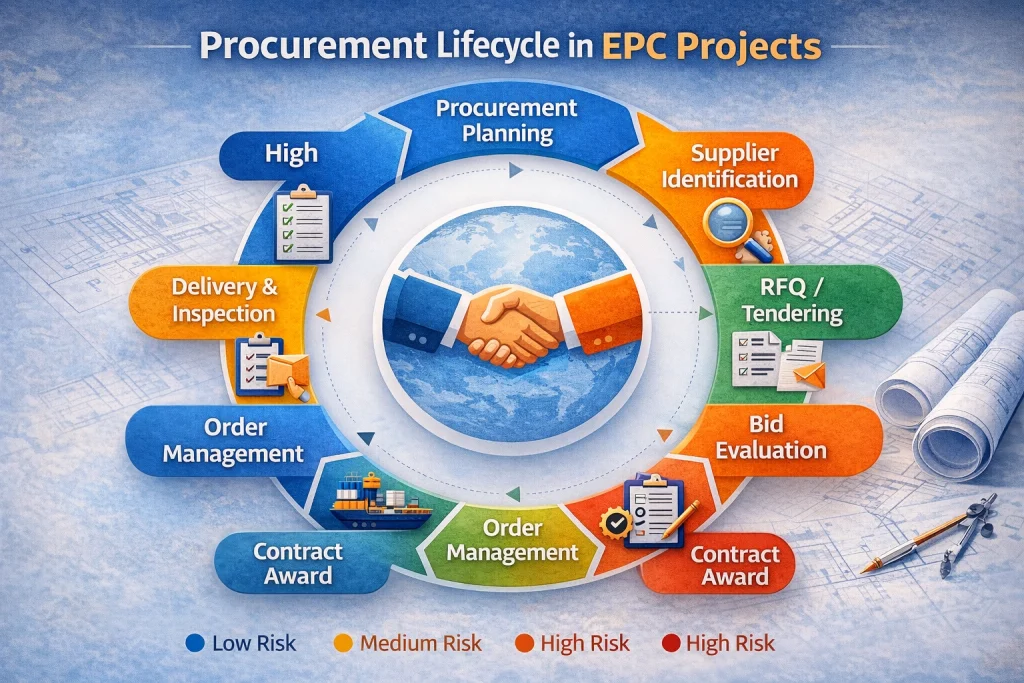
Procurement plays a central role in EPC project execution because equipment and materials represent a significant portion of total project costs. Understanding the procurement lifecycle helps project managers reduce procurement-related risks and ensure efficient resource management.
The procurement process in EPC projects typically includes several stages:
- Procurement planning
- Supplier identification
- Request for quotation (RFQ) preparation
- Bid evaluation
- Contract negotiation
- Purchase order issuance
- Delivery tracking
- Inspection and acceptance
Each stage of the procurement process must be carefully managed to prevent procurement delays and supply chain issues.
In procurement in project management, teams must ensure:
- Transparent supplier selection
- Clear procurement documentation
- Accurate demand forecasting
- Continuous supplier communication
By managing procurement effectively, project managers can maintain stable supply chains and prevent construction disruptions.
How AI Tools Can Improve Procurement and Risk Management
Artificial intelligence tools are increasingly being used in project management and procurement operations. These tools help project teams automate repetitive tasks, analyze large datasets, and improve decision-making.
AI tools such as ChatGPT and Claude can assist procurement teams in several ways.
RFQ drafting
AI can help procurement teams generate structured RFQ documents, ensuring all technical specifications and procurement requirements are clearly defined.
Supplier communication
AI tools can draft professional supplier communication emails, including quotation requests, follow-up messages, and delivery confirmations.
Proposal summarization
Procurement teams often receive multiple supplier proposals. AI can summarize supplier bids and highlight key differences in pricing, delivery timelines, and technical specifications.
Procurement checklists
AI tools can generate procurement checklists aligned with the procurement lifecycle, helping teams ensure every step of the procurement process is completed efficiently.
By integrating AI into procurement workflows, EPC organizations can improve procurement efficiency, reduce manual work, and strengthen overall project risk management.
Conclusion
EPC projects involve complex coordination between engineering teams, procurement departments, contractors, suppliers, and regulatory authorities. Because of this complexity, projects face numerous risks that can affect cost, schedule, safety, and overall performance.
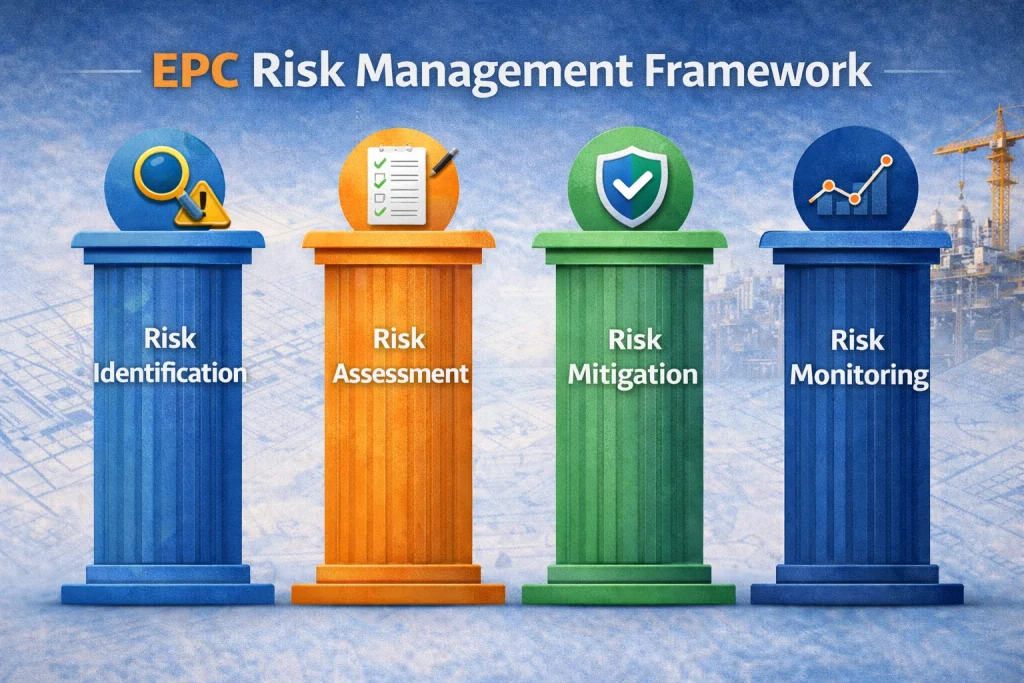
Common risks such as procurement delays, contractor performance issues, design errors, supply chain disruptions, and regulatory challenges can significantly impact project outcomes if not properly managed.
However, proactive risk management strategies, strong procurement processes, and the adoption of modern digital tools can help organizations minimize these risks. By strengthening project planning, improving procurement lifecycle management, and leveraging AI technologies, EPC companies can deliver projects more efficiently and maintain long-term competitiveness in the infrastructure and energy sectors.
Read:
1. Future of Procurement Jobs in the Age of AI
2. ChatGPT for Procurement and Contract Management
FAQs
What are EPC project risks?
EPC project risks are uncertainties that may affect project cost, schedule, safety, quality, or performance during engineering, procurement, and construction phases.
Why is risk management important in EPC projects?
Risk management helps project teams identify potential problems early and implement mitigation strategies that prevent delays, cost overruns, and project disruptions.
What is the procurement process in EPC projects?
The procurement process involves sourcing materials, equipment, and services required for project execution. It includes planning, supplier selection, RFQ issuance, bid evaluation, contracting, and delivery monitoring.
What are the main procurement process steps?
Typical procurement process steps include procurement planning, supplier identification, RFQ preparation, proposal evaluation, contract negotiation, and delivery management.
What is the procurement lifecycle?
The procurement lifecycle refers to the complete sequence of procurement activities from planning and sourcing to purchasing, delivery, inspection, and supplier evaluation.
How does procurement affect project management?
Procurement in project management ensures that materials and equipment are delivered on time, allowing construction activities to proceed without delays.
What are common procurement risks in EPC projects?
Common procurement risks include supplier delays, logistics issues, price fluctuations, equipment shortages, and poor supplier performance.
How can EPC companies reduce procurement risks?
Companies can reduce procurement risks by implementing structured procurement processes, evaluating suppliers carefully, maintaining alternative vendors, and tracking deliveries closely.
How can AI improve procurement processes?
AI tools can help automate RFQ drafting, summarize supplier proposals, generate procurement checklists, and assist with supplier communication.
What tools are used for project risk management?
Project teams often use scheduling software, procurement tracking systems, risk registers, financial monitoring tools, and digital collaboration platforms to manage project risks effectively.